Commercial waste management requires predictable budgeting rather than speculative post-landfill weight adjustments. Selecting container capacity depends strictly on the physical footprint of the project. A 10-yard bin…
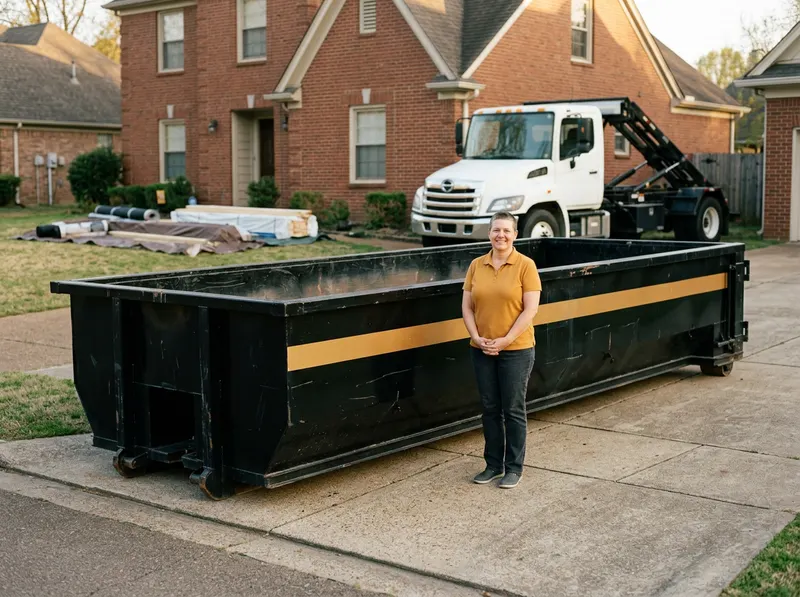
Commercial waste management requires predictable budgeting rather than speculative post-landfill weight adjustments. Selecting container capacity depends strictly on the physical footprint of the project. A 10-yard bin holds roughly 4 standard pickup truck beds of dense retail scrap, making it optimal for modest office renovations along Union Avenue in Midtown or small restaurant clear-outs near Cooper-Young. A 40-yard container holds approximately 16 pickup loads, which accommodates multi-family unit renovations in Cordova or complete commercial warehouse inventories cleared out in Hickory Hill. The functional trade-off centers on available staging ground versus debris volume: smaller 10-yard and 15-yard models fit into standard designated parking stalls without encroaching on public drive aisles, whereas 30-yard and 40-yard units demand 22 feet of clear length and overhead clearance from utility lines.
Site preservation is handled through residential-grade driveway and parking lot protection standards. Heavy steel wheels never touch bare concrete, cured asphalt, or decorative pavers directly; roll-off drivers position protective wooden runners beneath every ground contact point before setting the container. This eliminates the surface cracking, gouging, and oil staining that property managers frequently face with unbuffered industrial hauling rigs. In high-density districts like Central Gardens, Binghampton, and High Point Terrace, where alleyways or loading zones present tight access limitations, pre-delivery placement assessments ensure roll-off hoist trucks have the required 60 feet of straight-line approach room.
Operational scheduling accounts for Shelby County disposal regulations and local municipal rules. Standard drop-offs occur on private commercial property, rear loading docks, or secure tenant driveways, avoiding City of Memphis right-of-way street permit requirements. Routine deliveries proceed through three numbered steps: 1. Confirm your site dimensions and exact dumpster size by phone. 2. Receive the delivery truck during your assigned arrival window with wooden surface protection positioned on the pavement. 3. Fill the container to the level rim line and call for prompt hauling when your project concludes.
Every job gets a firm, written price after a free on-site visit.
Tell us about your commercial dumpster rental job in Memphis and we'll send a clear, written quote, usually the same day.
 DumpMate Dumpster Rental